← back
play sound

Travel by train · from Sound to mountains

“Are trains now the most luxurious way to travel?”Matthew Kronsberg, The New York Times
scroll
the story

What does it take to restore rail service from Tacoma, WA to Mount Rainier?

Tahoma (Mt. Rainier) is the most prominent peak in North America outside of Denali. The legendary naturalist John Muir declared:

"Of all the fire-mountains which, like beacons, once blazed along the Pacific coast, Mount Rainier is the noblest."John Muir

Every year Mt. Rainier National Park welcomes 2.5 million visitors and nearly 1 million automobiles. But 100 years ago visitors could take a train from the cities of Seattle and Tacoma right to the base of the mountain. This was no small operation either; in 1913 the Tacoma Eastern Railroad carried 120,000 passengers. In fact this railroad was inextricably linked with the development of the entire region. It's said the railroad follows the old paths of the Nisqually people who first inhabited the western flanks of the Mountain. Every community on the highway that now leads to the Mountain was once a rail stop.

Although the age of the automobile has largely supplanted train travel, rail never died. A steam engine much like those that once hauled timber out of the deep forests around the mountain is still operated as a tourist excursion on a limited loop of track by the Western Forests Industry Museum, a local non-profit.

Tahoma Express is a project that supposes that sometimes the best ideas are not necessarily the newest. Automobiles have had their time, but perhaps the way we did things before was better for both people and the land.

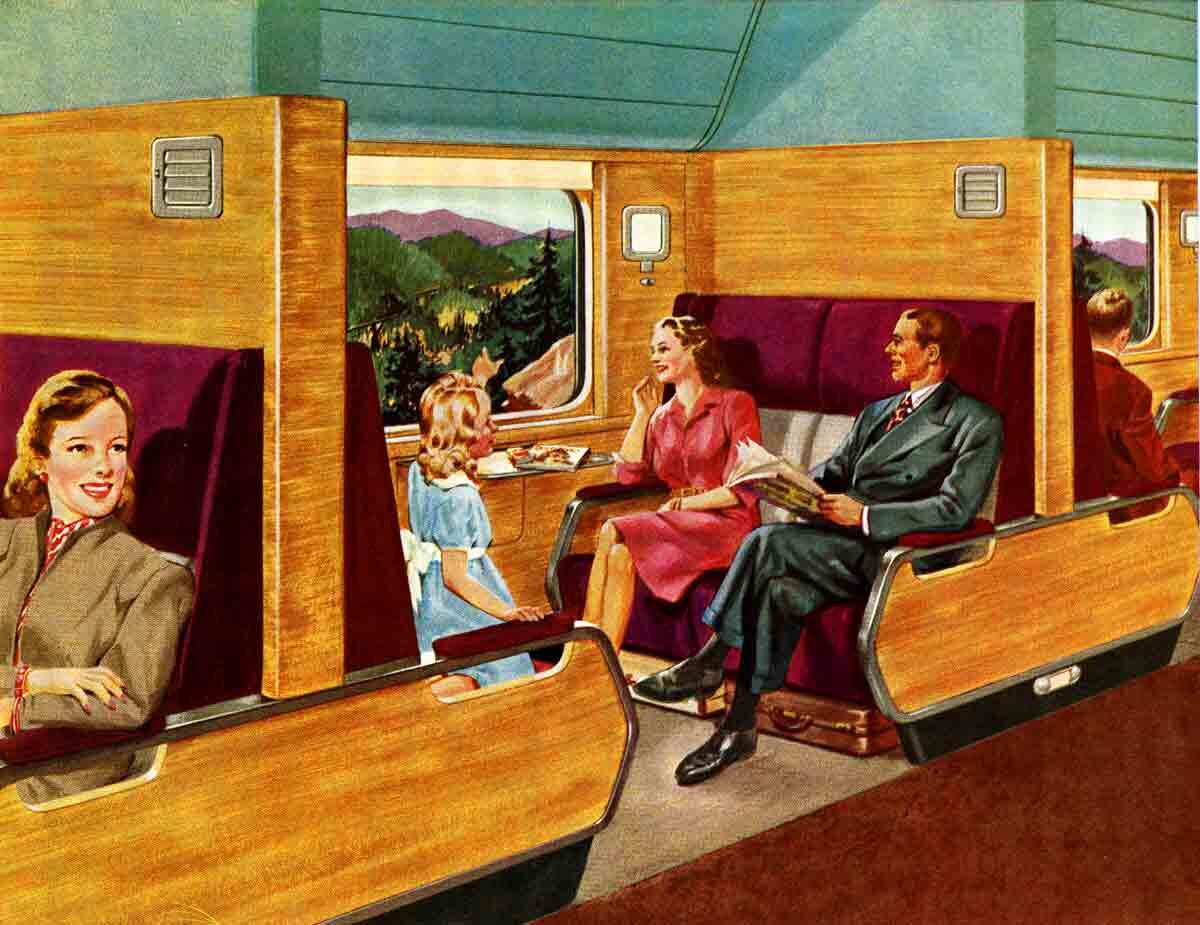
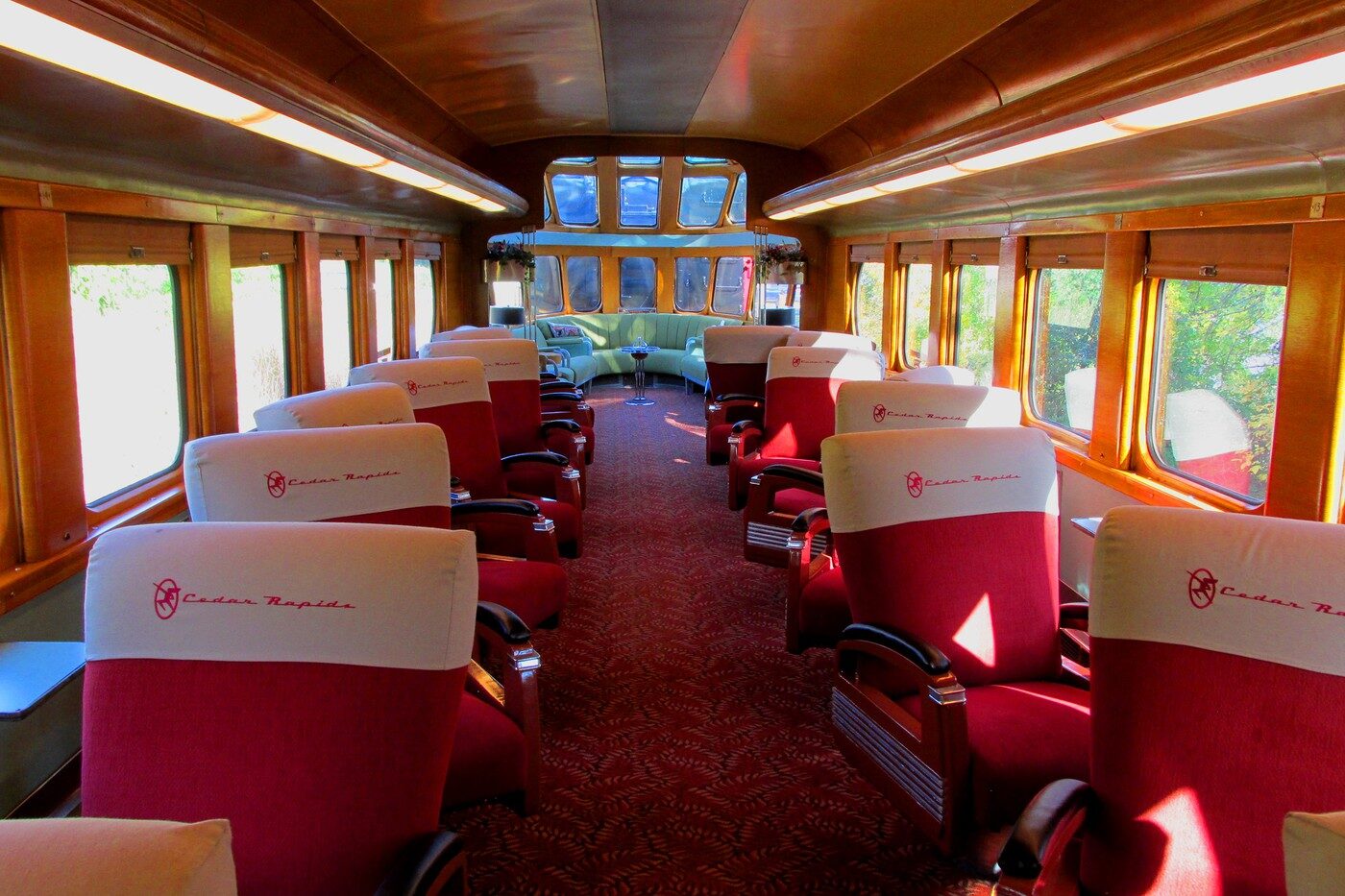
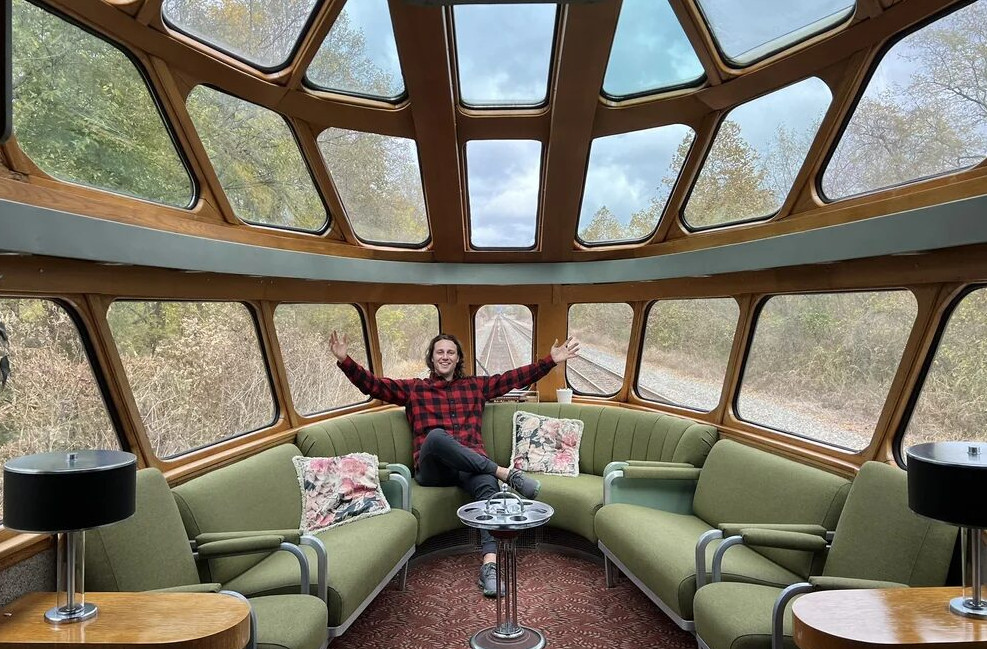
Tahoma Express envisions a future where the train is not just a ride on the way to the Mountain but an experience in and of itself. A hearkening back to the golden age of rail travel. The images featured here are based directly on real trains that ran along the Milwaukee Road from Chicago to Seattle.

Above all, the Tahoma Express is a project about stories. A revival of a railroad that remembers all that came before, and could continue telling new tales long into the future.

All Aboard!
the case, by the numbers
120,000
passengers carried by the Tacoma Eastern Railroad in 1913, roughly $4 million in fares in today's money
2.5 million
visitors to Mount Rainier National Park in 2024
1 million
automobiles to the park that same year
70,000
riders on the Mount Rainier Scenic Railroad in 2024, about $3.2 million in revenue (2024 IRS Form 990)
17,795
people across the Upper Nisqually corridor, with Eatonville the largest town at roughly 2,600
~80%
lower emissions per traveler riding the rail rather than driving
~7%
of Amtrak Cascades' record 993,000 riders in 2024, matched by the MRSR steam excursion on fewer than 23 miles of track

Serviceable track still runs from Tacoma to Elbe; the line from Elbe to Ashford was abandoned and overgrown.

Where things stand now: the Mount Rainier Scenic Railroad was purchased by WFIM in 2025, and any passenger service reaching Tacoma would still interchange with BNSF at the city end. In April 2025 the Mineral to Morton trestle, a 28-span structure first built between 1909 and 1921, was destroyed by fire; a full rebuild is estimated at $5 to 10 million.

speculative design · Harvard GSD Ecologies, 2025

The Cars

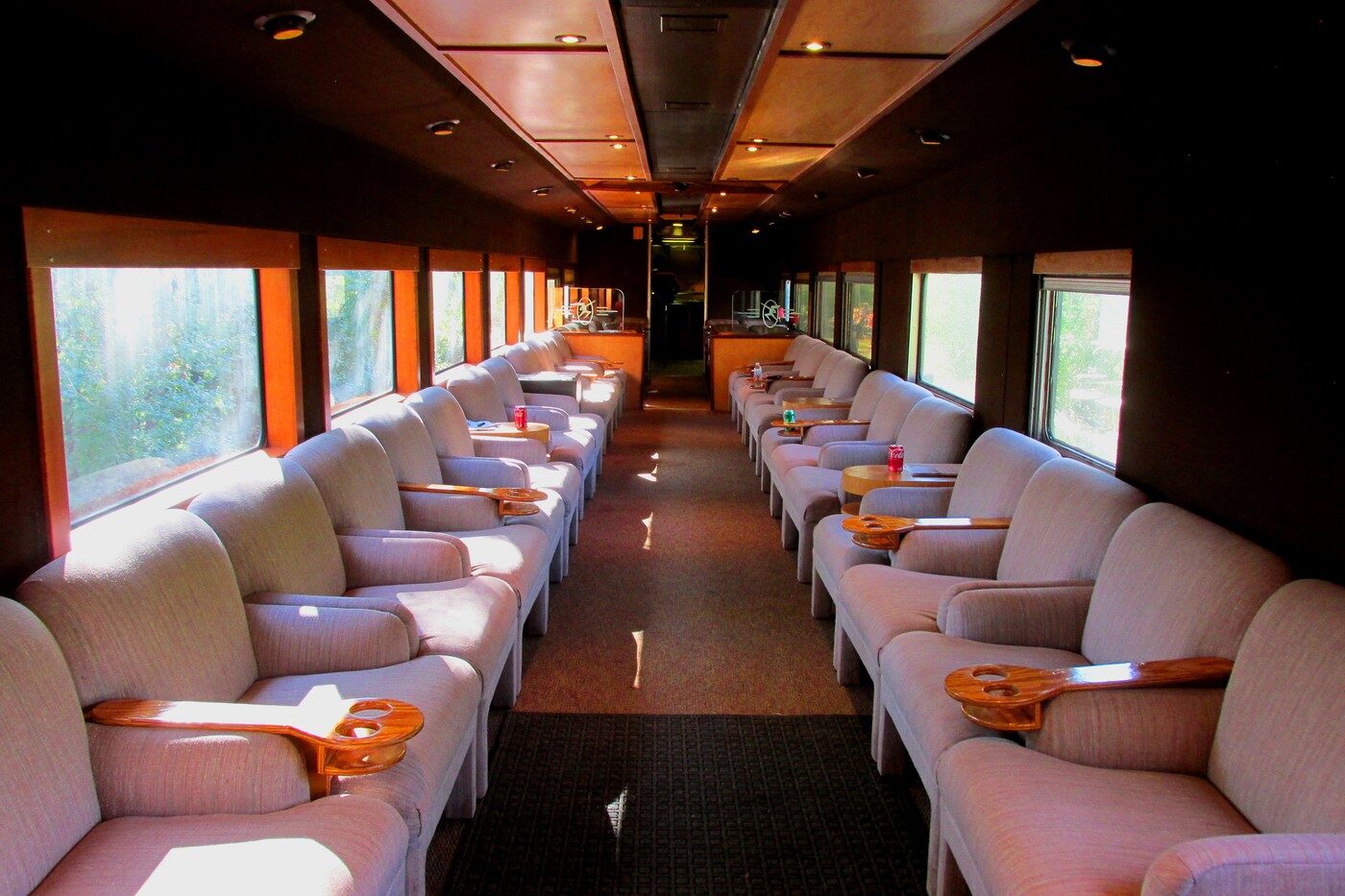
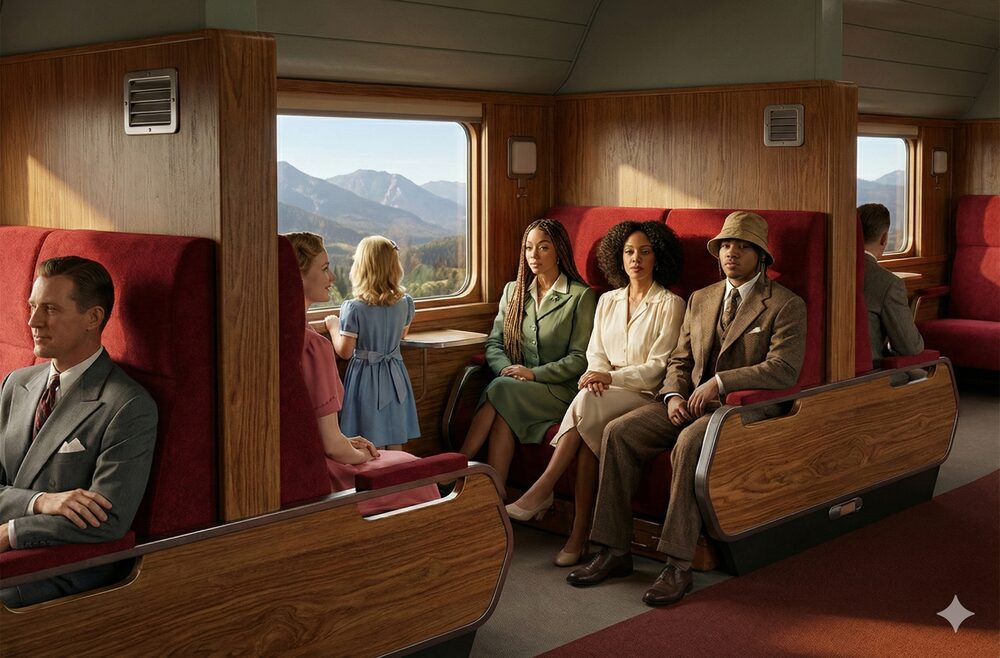
Coach car interior
Coach Car
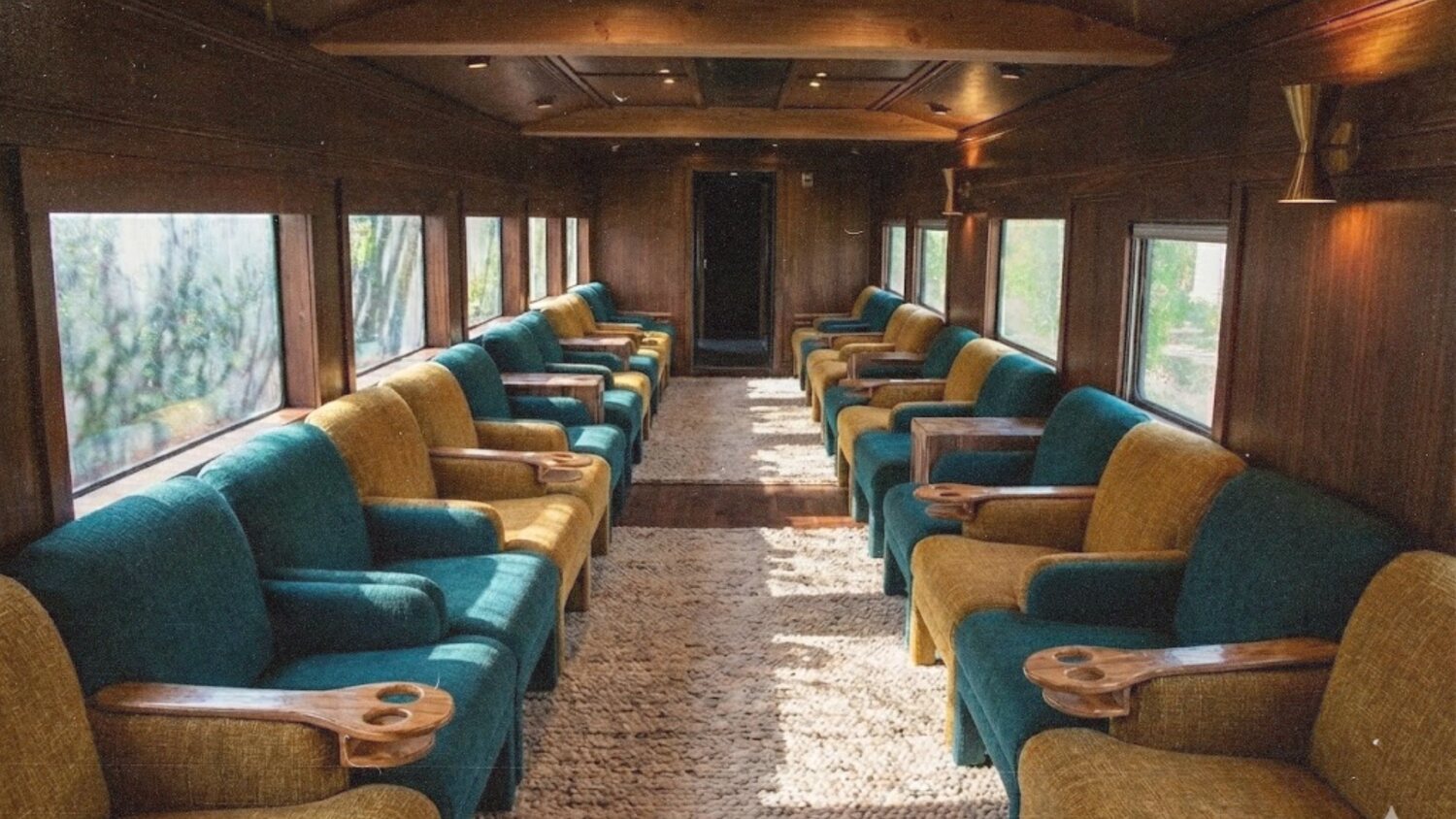
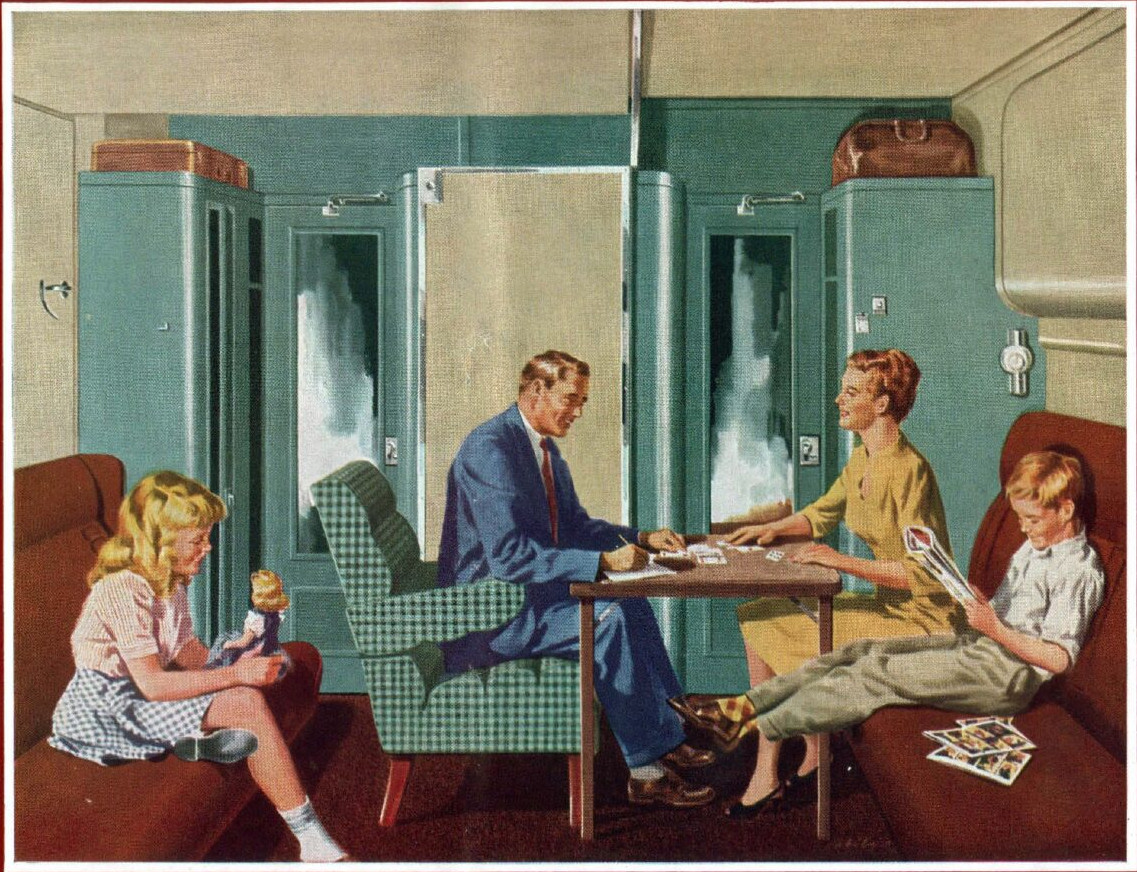
Rendered parlor car interior with teal and mustard seats and wood paneling
Parlor Car
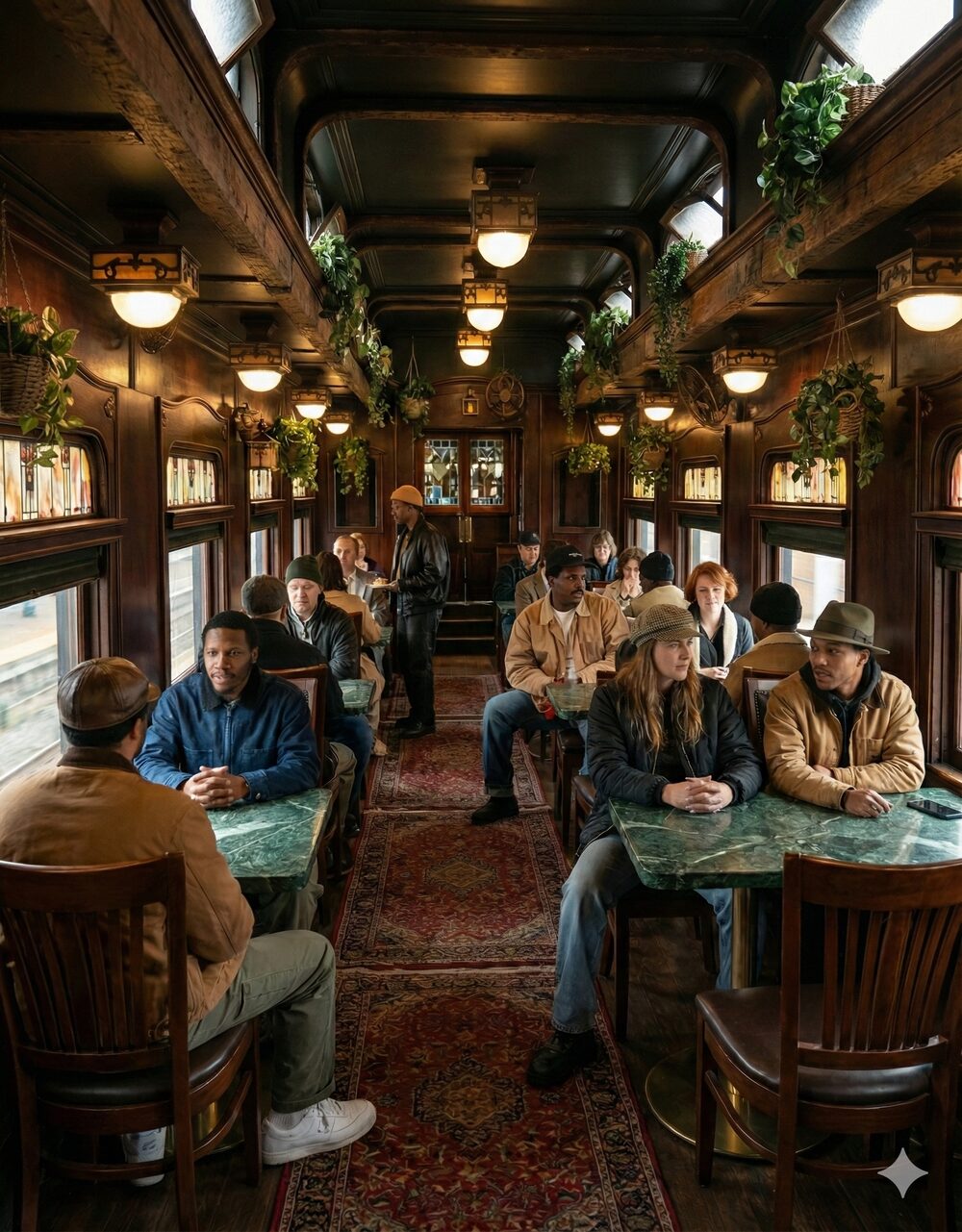
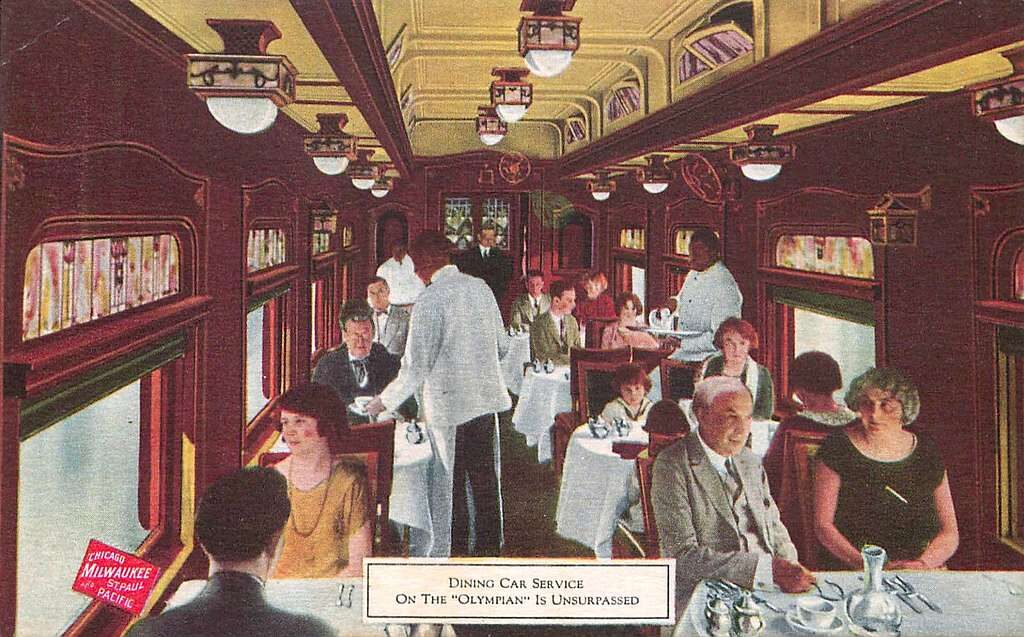
Dining car interior
Dining Car
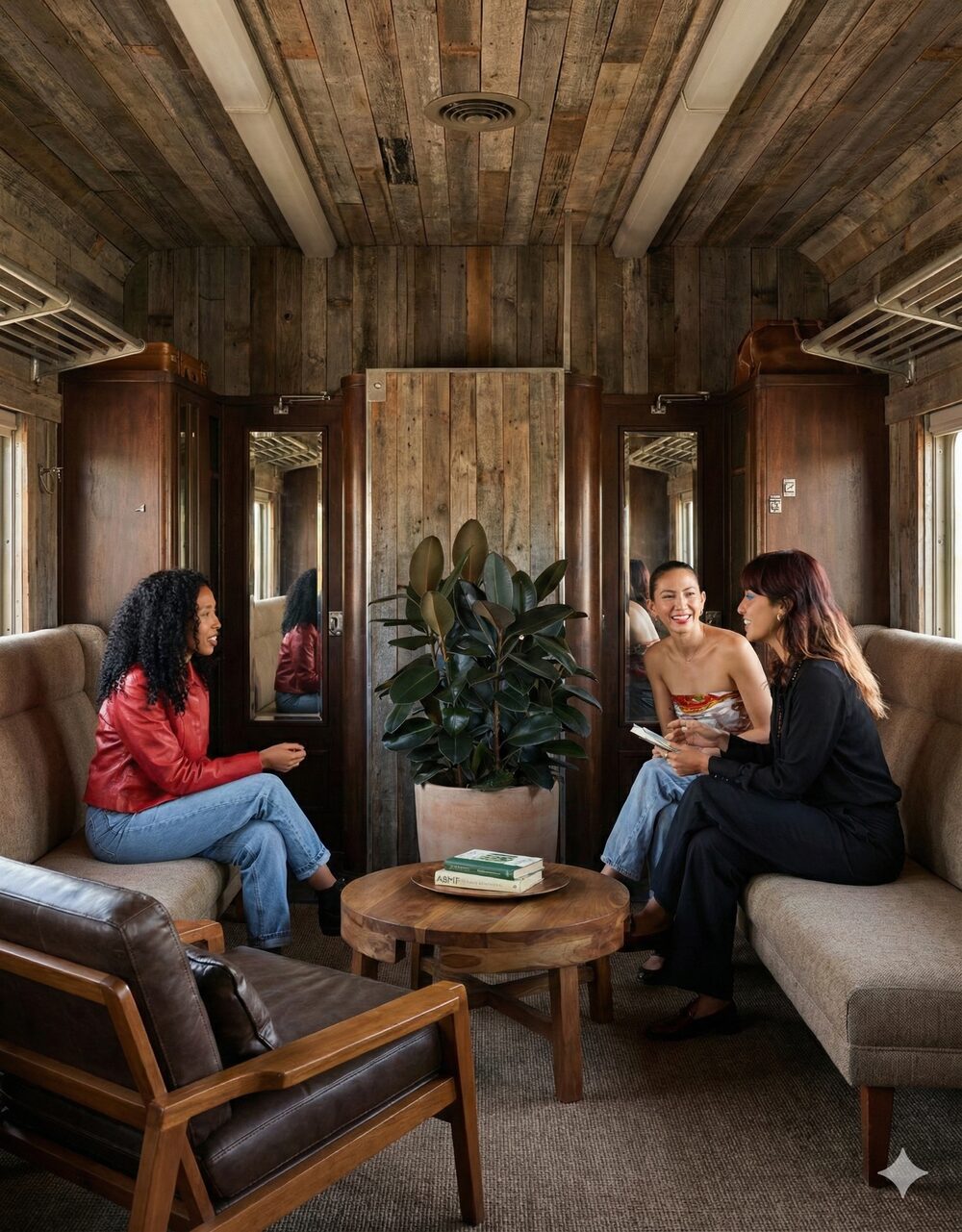
Private lounge car interior
Private Lounge Car

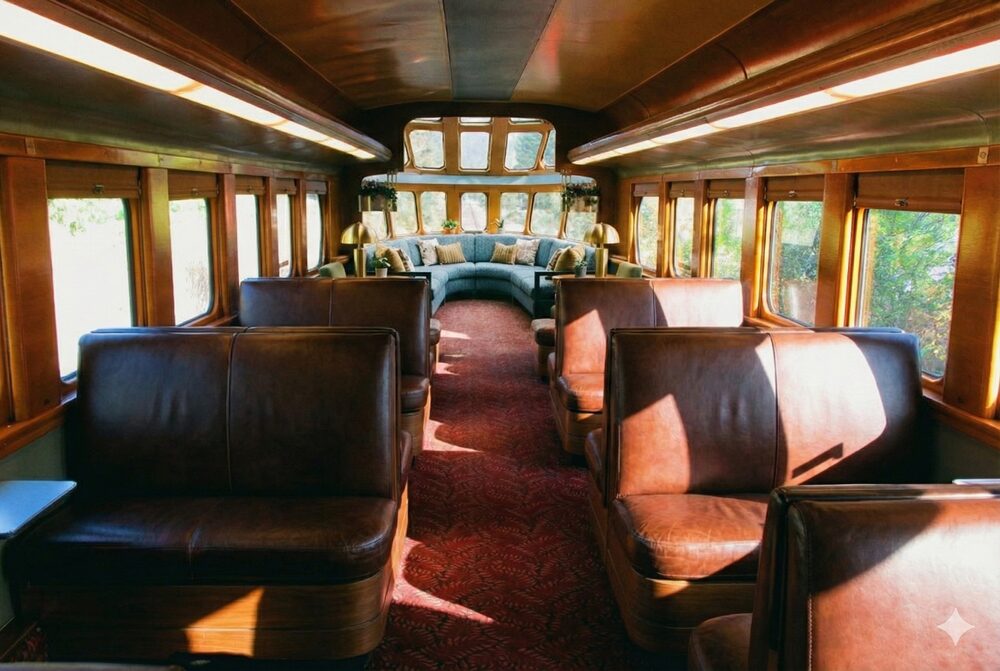
These images are based on real images of the Olympian Hiawatha which ran from 1947 to 1961 between Chicago Illinois and Tacoma Washington. It was operated by the Milwaukee Road which also owned the track from Tacoma to Ashford Washington at one point. The layout of these cars matches that of the historic train while the furnishings and details have been updated by drawing on contemporary Cascadian examples particularly the lobby and restaurant of Populus Seattle in Pioneer Square.

Dome car interior
Dome Car
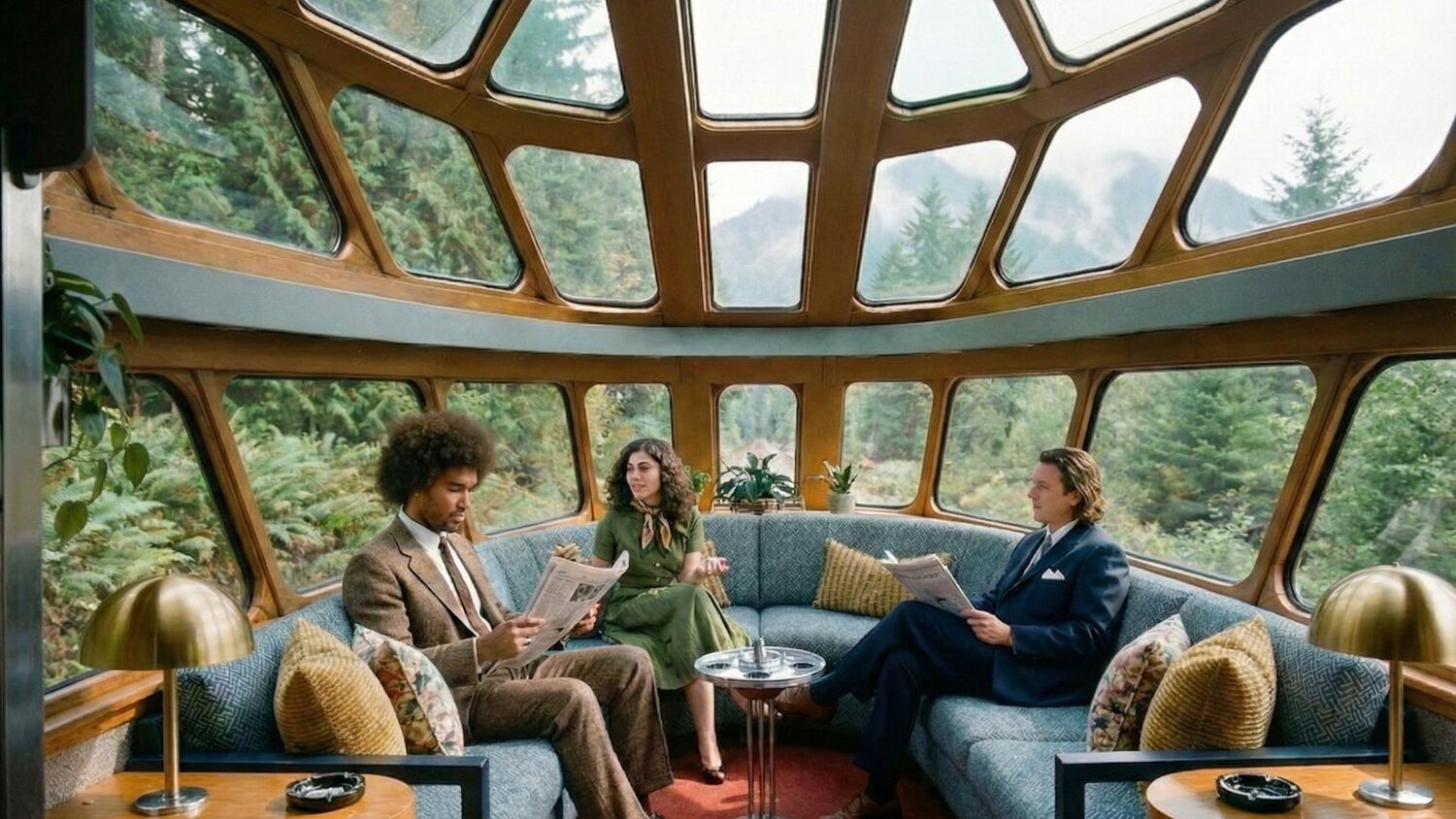
Rendered observation lounge with a domed glass roof and forest views
Observation Lounge
Travel by Train
Travel by Train, page 1 Travel by Train, page 2

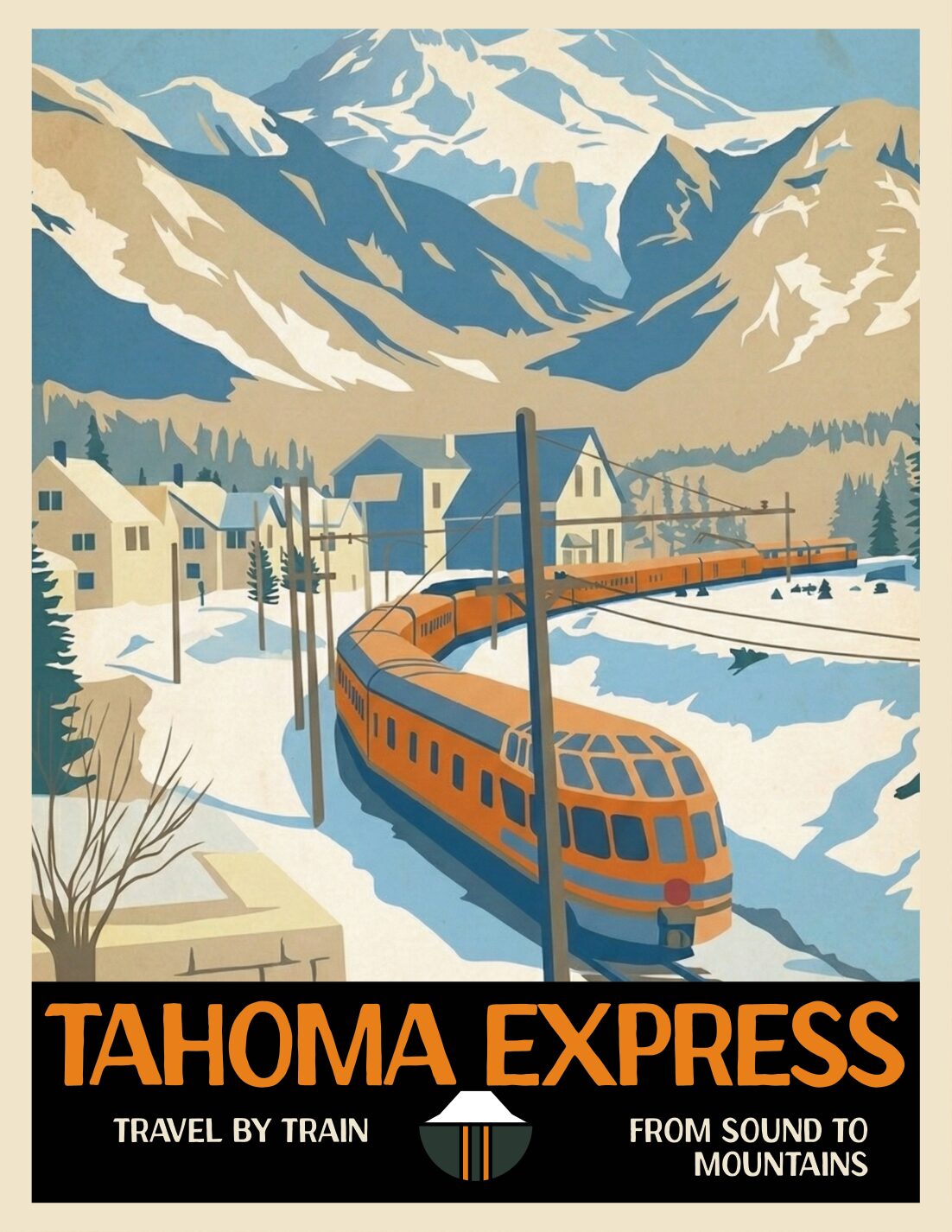
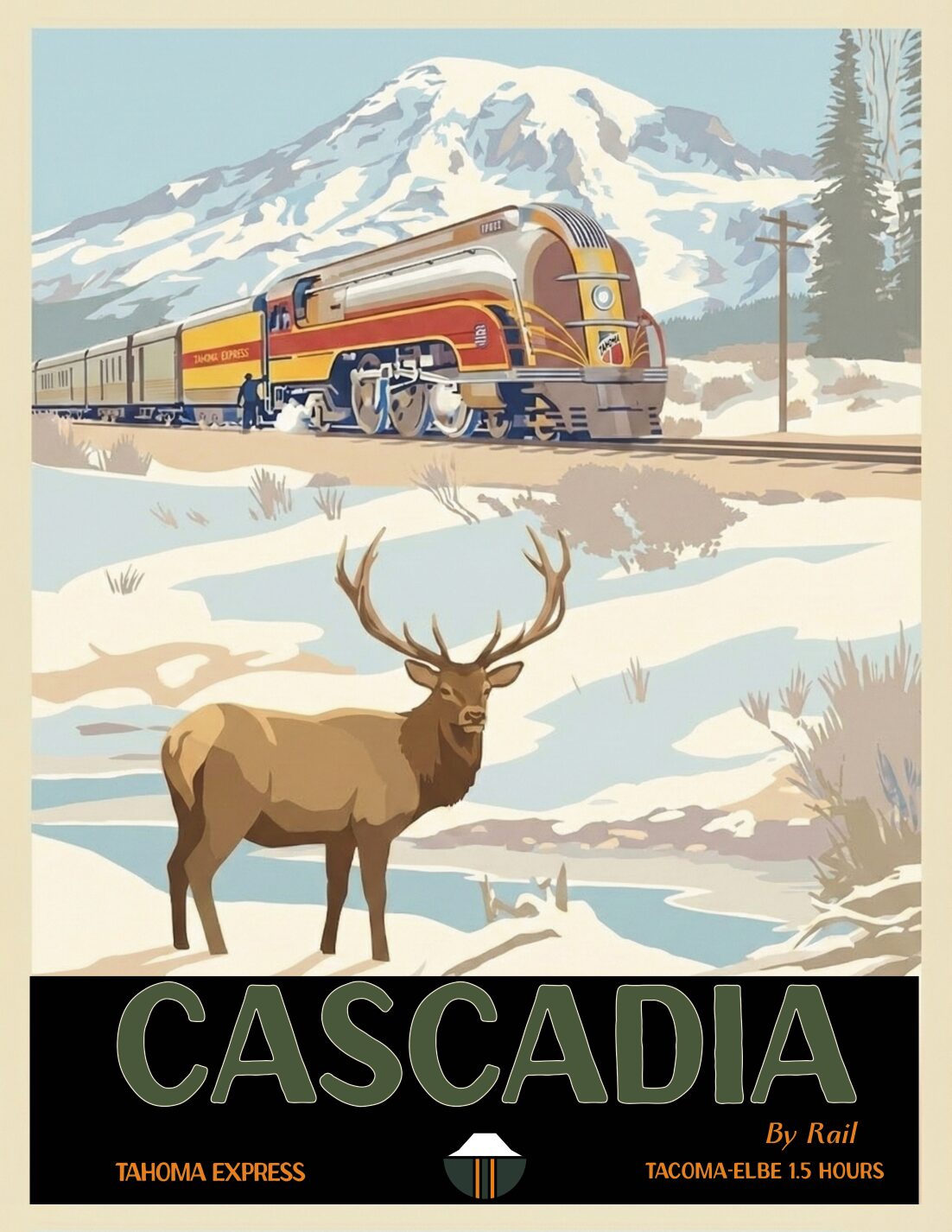
Composed in the style of Northern Pacific poster artist Gustav Krollmann, with imagery drawn directly from the work of railway artist Chris Oldham.

Two promotional posters in the vintage travel idiom: the Tahoma Express rounding the snowfields below the peak, and a Cascadia scene of the streamliner crossing open country with an elk in the foreground. Both sell the imagined service the way the old railroads sold the Northwest, as a journey worth taking for its own sake.

the originals

The vintage material this project descends from: the Milwaukee Road and Tacoma Eastern posters and brochures that once carried travelers to the Mountain. Tap any to enlarge.

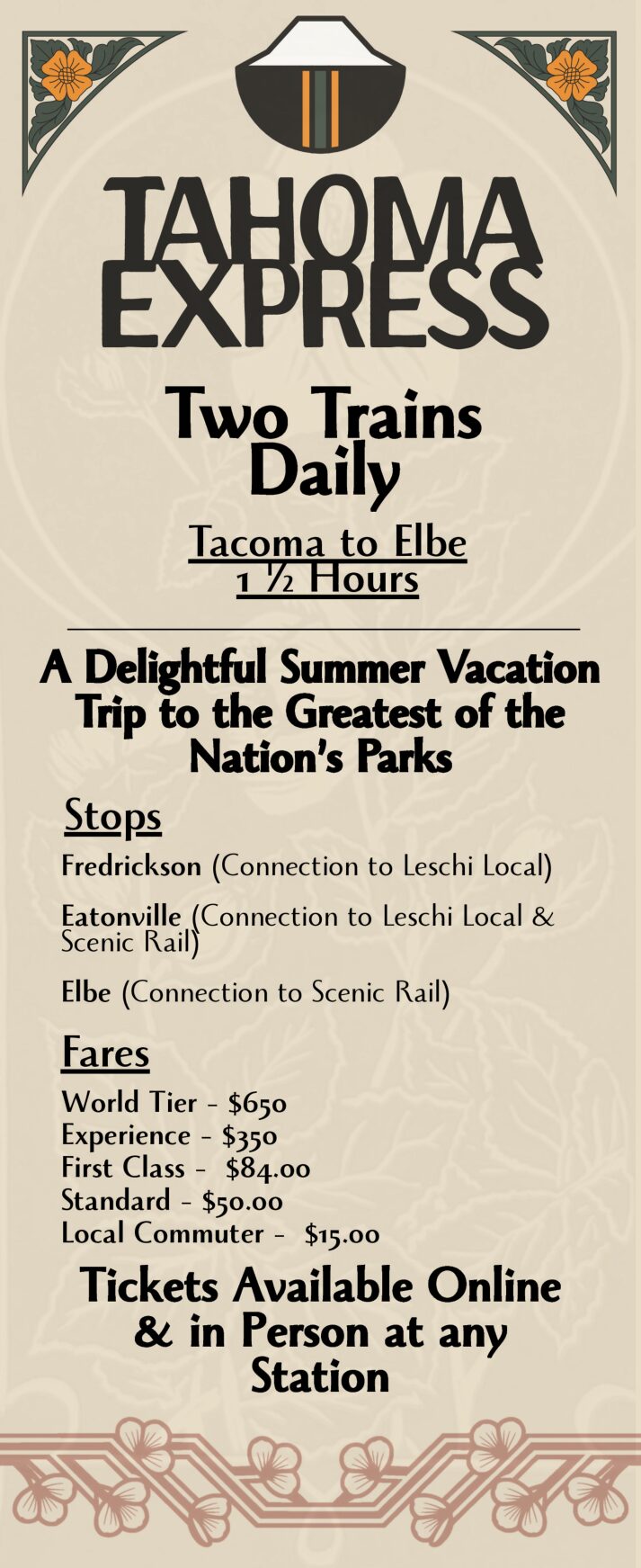
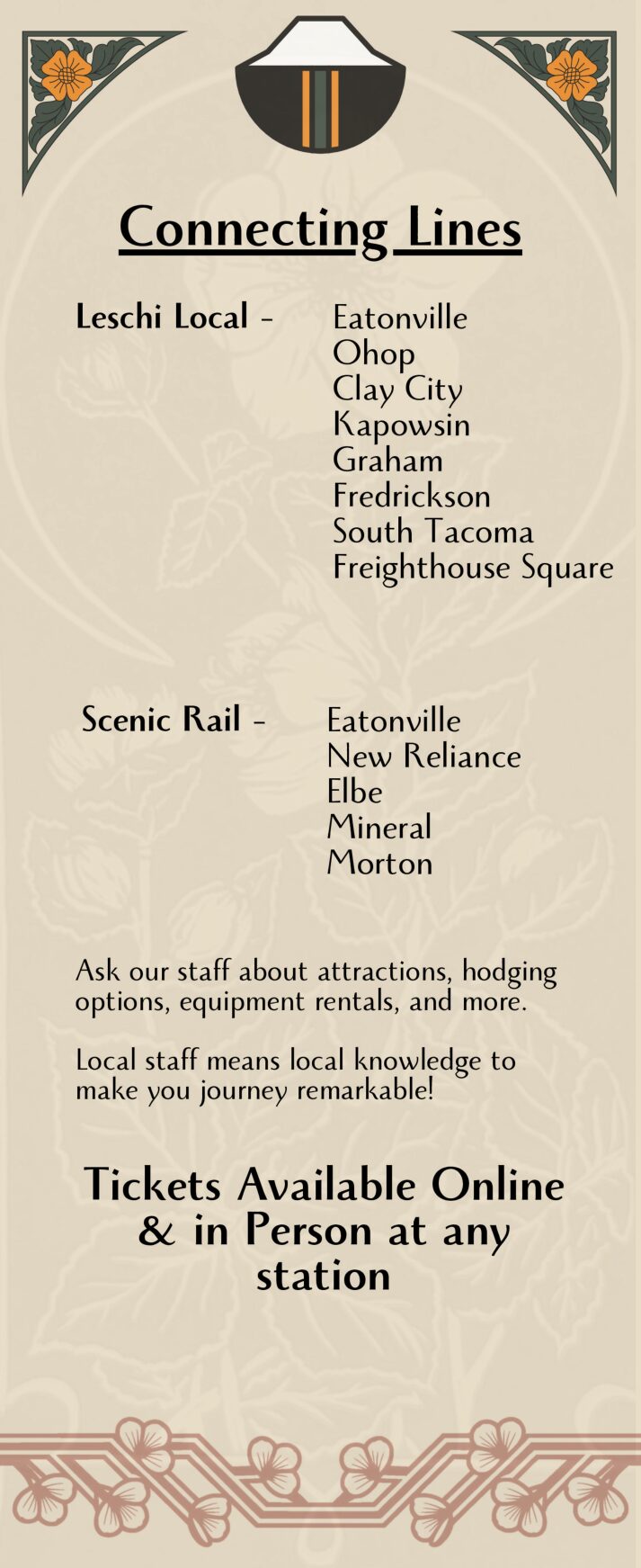
Speculative Schedule
Tahoma Express booklet page
flip through
the ecological case

Why is this an ecological project?

Oku (奥), inner space: private, intimate, and deep; exalted and sacred; profound and recondite. "Locations such as mountains and groves of trees are considered realms that are sacred and lofty, hence forbidden." Oku has the effect of embedding drama and ritual in the process of the approach itself, so that instead of going out of a route, the movement is all about searching or roaming, a feeling described as "moving into unknown places." An impression of oku is achieved through multi-layered boundaries that some scholars call spatial creases; another analogy likens oku to the core of an onion's many layers.

The mountains are inner space; the Mountain is the center of it all.

The land and forests around the mountain have been degraded, exploited, and fragmented, but the spirit still remains. This project is to nurture that spark.

Examples of the many places which compose the region

  • Northwest Trek Wildlife Park: a place to see and learn about the animals that live in the region.
  • UW Forestry School: a place dedicated to the study of the forests, and some might criticize their exploitation.
  • Mountaineering firms: outfits run by those insane enough to scale treacherous peaks; people with a visceral connection to the mountain and how the changing climate affects it.
  • Alder, La Grande, and Mossyrock dams: dams look boring at first, but they provide power and are inextricably embedded in the ecosystems of the rivers they impede. Dam operators must know as much about wildlife as they do about electricity.
  • DeGoede Bulb Farm (now closed): an example of the region's agriculture, alongside llama, lavender, pig, and vegetable farms.
  • Pioneer Farm Museum: a glimpse into the past, how early settlers and native residents lived.
  • Recycled Spirits of Iron sculpture park: a unique site created by a local artist; contemporary folk art, if you will.
  • The National Park: dedicated to the mountain at the center of it all, the monument that draws millions toward it. Tahoma: a unique, abundant source to get, fetch, or carry water from.

All these places are attractions in the area. When you experience all of them the picture begins to form. They all have something to teach about the area, and they all connect: when you see the web of relationships that ties them together, ecology becomes intuitive.

Here is the paradox: the train runs on a fixed track and its stops are chosen for you, yet that very curation is what draws you in deeper. The set route does not flatten the trip into sightseeing; it asks for a closer engagement with the land. Somehow each stop says explore here, there is something worth seeing.

When travelers chart the straight path of the highway from the city to the peak, they are merely sightseers. But if they experience these many overlapping layers, the sacred core is revealed, and a journey of tourism becomes a pilgrimage.

Booklets

The booklets are staged as design fiction: an investor pitch from Viapine Ventures dated 2026, and retrospective booklets dated 2036, each carrying the line “Not Real, yet.”

The Pitch
Pitch booklet page
flip through

The investor case, worked through chapter by chapter: the state of US passenger rail, twenty-first-century luxury and heritage rail, the niches a new operator might incubate, and the Tacoma Mountain rail corridor itself. It covers market size, the business model, and the risks, from the cost of rebuilding track and rolling stock to BNSF's grip on the line and the threat hanging over Freighthouse Square, before arriving at the investment opportunity.

Community
Community booklet page
flip through

How the railroad roots itself in the towns along the line by sourcing food, drink, and specialty goods from local makers. It profiles partners like Copper Creek, serving its blackberry pie since 1946, and Eatonville's Mill Haus Cider, so that a taste of the Mountain rides along on every trip.

History & Ecology
History and Ecology booklet page
flip through

The long view of the corridor, opening with the Nisqually, who have lived along the river for ten thousand years, and Chief Leschi, then moving through the timber era and the logging towns the railroad built, including the Japanese mill workers too often left out. From there it turns to stewardship: a pledge of five percent of profits to a Forests, Farms, and Families Trust to reforest and protect the land the railroad once helped clear.

Why More Trains? → Heritage Railways → 2024 Heritage Rail Impact (study) → exhibition poster →
sources & further reading